Your phones don't stop ringing, your hold times keep climbing, and your staff keep toggling between systems that were never built to talk to each other. CareDesk pulls patient context, scheduling, and clinical routing into one coordinated system, so your team resolves more requests on the first call.
Up to 60% of appointments self-scheduled, like Lakeside Pediatrics.

Your staff sees a working flow. Your patients experience a real interaction. You get a clear answer on whether CareDesk fits your operation.
We respect your privacy. Your information is safe.
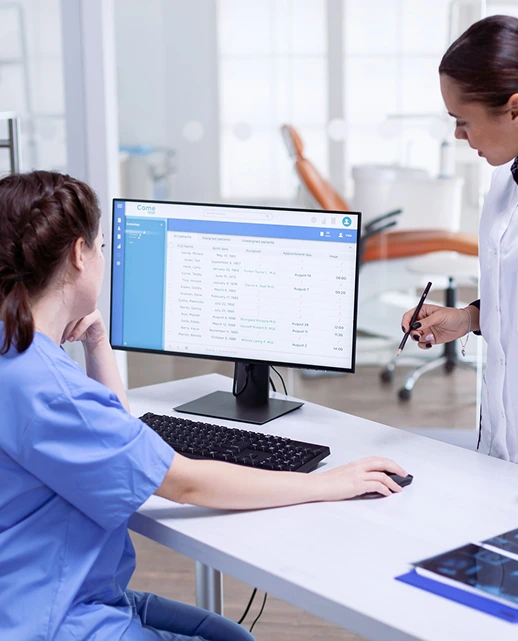
Healthcare contact center software manages your patient communication across channels while supporting the clinical complexity your team handles every day.
Unlike generic CCaaS platforms like Amazon Connect or Five9, healthcare-specific systems are built around three realities your operation already knows well:
A generic platform routes your calls and tracks your metrics. A healthcare platform understands why your patient is calling, what should happen next, and how to do it safely. That means fewer transfers, more accurate scheduling, and a measurable reduction in repetitive work for your team.
When evaluating healthcare contact center software, the difference shows up in how well the system handles your real-world complexity.
These two systems solve different problems for your operation, but the strongest setups combine them in one place.
Who is this patient?
What is their history?
How have we interacted before?
In healthcare, separating these two systems creates friction. Your agents toggle between platforms, context gets lost, and your patients repeat themselves.
Keona CareDesk brings CRM and contact center functionality into one healthcare-native system, so patient context and action live in the same place. Your conversation moves forward without interruption.
From the moment your patient calls, the system organizes the information.
Instead of reacting to patient requests, your operation shapes them into predictable, efficient pathways.
Through voice, chat, or web, your patient is identified and the reason for the call is captured.
01Based on urgency and intent, the call is directed to the correct pathway, determined by your practice rules. Routine requests move toward automation, while complex or clinical cases route to your staff with full context already in hand.
02Your staff are supported with real-time guidance, so triage and scheduling decisions stay consistent across your team and training time drops sharply.
03Your appointments are booked, follow-ups are scheduled, and notes are captured directly into the system with no duplicate work.
04Every interaction feeds analytics that improve your routing, automation, and performance over time.
05Healthcare organizations using CareDesk see measurable improvements in patient access and operational efficiency.
Your patients complete bookings without staff involvement, compared to industry averages below 10%.
Fewer errors mean fewer reschedules, less downstream friction, and stronger provider and patient trust.
Your operation grows without growing your service team, because routine volume gets absorbed by automation and your existing staff focus on complex cases.
Shorter waits. Less staff burnout. More patients getting the care they need without delay.