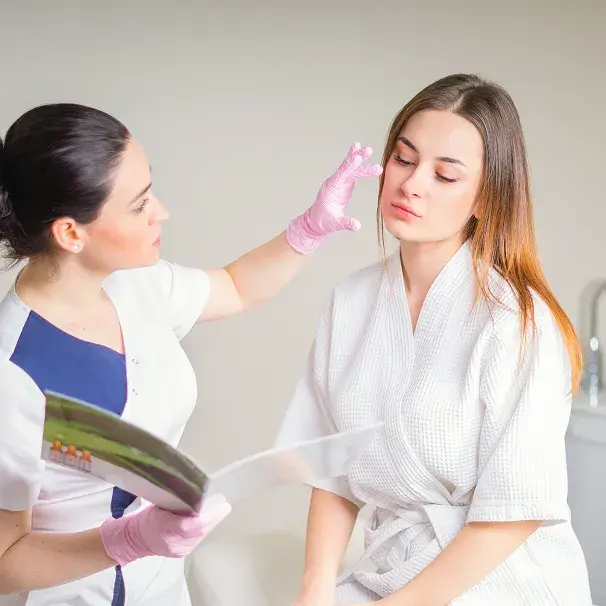
In dermatology, the same inbox includes rashes, acne, mole checks, and cosmetic consultations. When routing is generic, medical urgency is missed, cosmetic demand crowds out care, and staff are forced to make de-facto clinical decisions without training or images.
The result is delayed diagnosis, frustrated providers, and patients who leave because someone else “could see me sooner.”
CareDesk is built differently. Purpose-built routing AI that knows your specialty, your protocols, and your patients.
Generic AI routing fails in dermatology because of four critical complexity factors:
In dermatology, generic routing doesn’t just reduce efficiency — it can introduce delayed evaluation and misprioritized access.
CareDesk provides dermatology scheduling, waitlist automation, and medical vs cosmetic routing using dual-engine AI:
CareDesk does not diagnose. It executes your practice’s scheduling and escalation rules.
01
Intake
Reason for visit, symptom descriptors, lesion changes, prior skin cancer history, immunosuppression, autoimmune conditions, and recent biopsies.
02
Route
Match urgency, provider, room type, and slot length using practice-defined rules.
03
Resolve
Book, escalate, or hand off with context so staff can act without restarting the conversation.
of inbound dermatology requests completed end-to-end in the first 60 days. Autopilot resolves repetitive dermatology scheduling interactions, including acne follow-ups, cosmetic consults, and established patient visits, without staff involvement.
in 60 days, protecting revenue by filling last-minute openings with medically appropriate patients triaged from wait lists — not first come, first served.
additional scheduled visits per day per practice. Real capacity increase for our dermatology partners so they can see urgent medical patients without extending already long wait times.
Multi location urology group with 56 surgeons across 19 locations.
Maintaining quality of service while scaling call center, comprehensive standard operating procedures (SOPs) slow to navigate, long wrap-up times for calls to be fully documented.
Multi location urology group with 56 surgeons across 19 locations.
from slow performers and new hires
Training shortened from weeks to hours
auxiliary time savings Fewer calls forwarded to physicians

CareDesk evaluates urgency, resources, and follow-up requirements simultaneously so urgent lesions are seen sooner and cosmetic demand doesn’t crowd out medical care.

Action: Urgency flagged from language. Offer earliest medical slot or escalate to nurse to review.
Action: Route to cosmetic pathway without displacing medical access. Book appropriate provider and room.
Action: Identify pathology status, provider responsibility, and required timing. Schedule or escalate per protocol.
Over 90% of repetitive dermatology scheduling interactions are completed autonomously or handed over with full context so staff aren’t left restarting the conversation.
Practice Intelligence 360 - Dermatology Configuration
You only pay for completed care, not AI chatter. Works with your scheduling rules, provider templates, and escalation pathways. Escalations include context so staff do not restart the conversation. Creates a clear audit trail of who did what, when, and why.
13 years of dermatology workflow refinement. HIPAA compliant. EHR integrated. Built for specialty depth with medical urgency recognition.


Patient 360: What the system knows about the patient
Skin cancer and autoimmune history, immunosuppression, lesion change descriptors, prior biopsies, cosmetic vs. medical patterns.

Provider 360: What the system knows about your clinicians
Specialty focus, room/equipment needs, procedure preferences.

Practice 360: What the system knows about your operational reality
Room constraints, reserved blocks, site schedules (e.g., phototherapy blocks, cosmetic days).
We will map three of your highest-volume dermatology call reasons and simulate how routing, prerequisites, and scheduling work in your actual environment. We’ll show you what staff sees, what the patient experiences, and how documentation is captured.