When scheduling rules live in people’s heads, errors are inevitable. Scheduling logic is enforced consistently, so appointments are placed correctly instead of fixed later.
Before

After
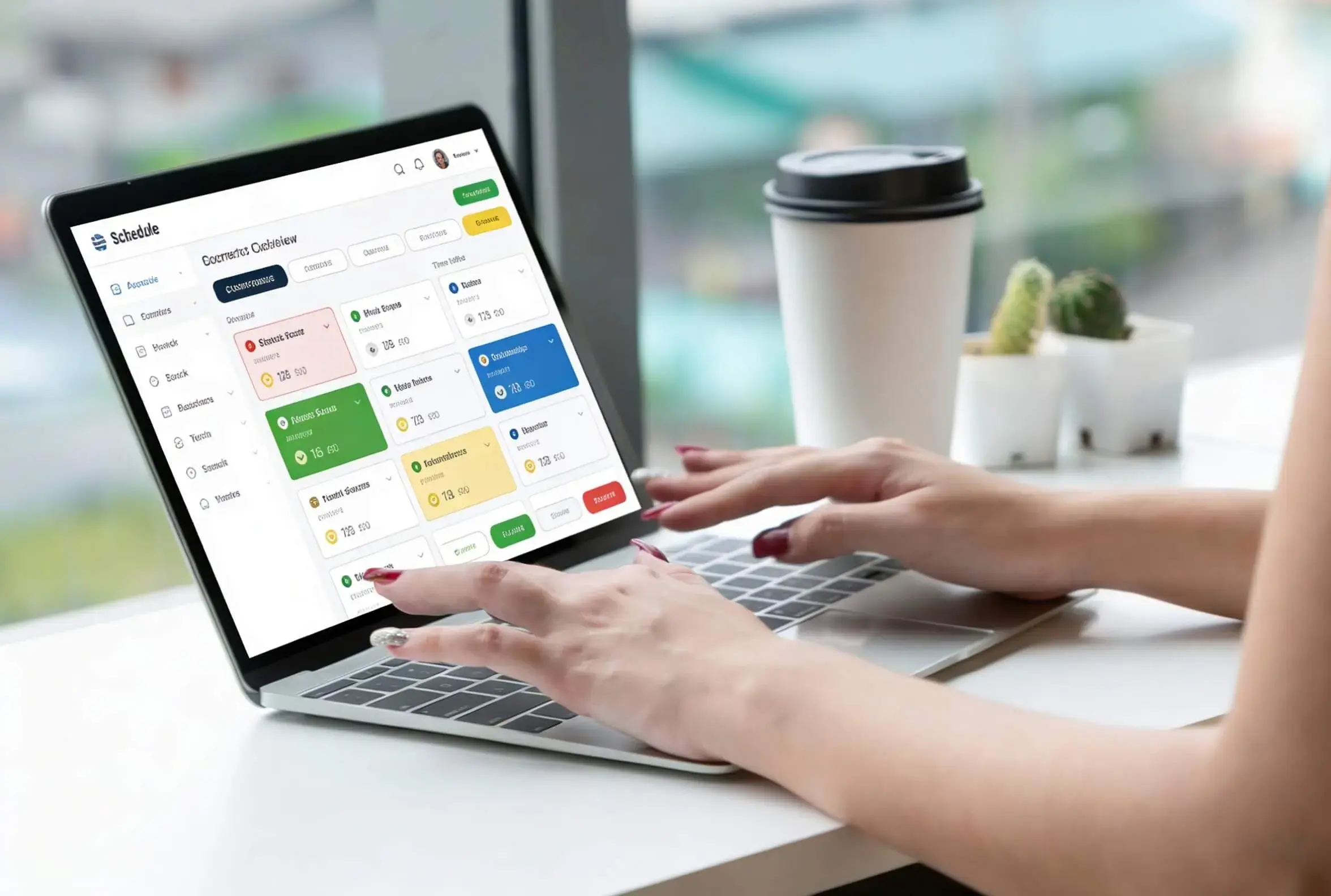

Scheduling looks simple until it isn’t.
Appointment types, provider preferences, room, equipment, and timing rules all matter.
Most practices rely on long scheduling manuals, knowledge held by senior staff, and guesswork under pressure.
Appointments are booked into the wrong slots
Providers complain that “the schedule is wrong again”
Staff spend hours fixing avoidable mistakes
The problem isn’t training. It’s expecting people to enforce hundreds of rules perfectly, all day.

Slot length, buffers, room requirements, and provider preferences are applied automatically at booking.
When the schedule starts right, downstream rework, delays, and complaints drop dramatically.
When mistakes are prevented by design, trust rebuilds between providers and access teams.
The schedule becomes predictable again for staff and clinicians.
01
Pre-visit requirements are validated automatically
Many appointments depend on prerequisites: imaging, referrals, prior authorizations, lab results, or prep instructions. CareDesk checks these requirements before an appointment is booked, and guides staff until all conditions are met.
02
Multi-resource coordination happens in one action
Scheduling often requires aligning more than a provider. CareDesk evaluates rooms, equipment, locations, and buffer constraints together at the time of booking, ensuring the appointment fits the requirements instead of creating downstream conflicts.
03
Acuity and clinical logic escalate when needed
Not all scheduling requests are equal. When symptoms or timing indicate higher acuity, CareDesk flags the request and routes it appropriately. Staff are guided rather than relying on memory or judgment under pressure.

The challenge:
Complex orthopedic scheduling with surgical coordination, multi-location rules, equipment requirements, and insurance pre-auths was generating constant errors.
100%
scheduling accuracy, zero provider complaints.
"We had accepted that scheduling errors were part of healthcare. Wrong. When the system knows every rule and won't let you break them, perfection is the new normal. Dr. Martinez hasn't complained in 8 months."
Jordan Sappington
Operations Director
CareDesk removes human variability from scheduling. The same rules are applied every time, regardless of who takes the call.
Edge cases, buffers, and prerequisites are resolved at booking instead of triggering downstream fixes.
When schedules are consistently accurate, complaints drop and working relationships improve.







See How Schedules Stop Breaking
15-min demoCalculate my scheduling error cost